TikTok SEO is the practice of making a video legible to TikTok’s search and to Google by placing the exact phrase people type into search into every layer those systems can read: the spoken audio (transcribed by auto-captions, on by default since late 2023), the on-screen text in the first seconds, and the description, which now allows up to 4,000 characters and doubles as the page title Google indexes. TikTok lists captions, sounds, and hashtags among its ranking signals, and Google’s own documentation confirms TikTok content can surface in Google Search. Search is still a minority of TikTok views (about 4%, versus roughly 73% from the For You page, per Metricool’s 2026 study of 2.3 million posts), but it is the slice with intent, and for a hotel or destination that is the slice worth winning. The five strategies below: research the query, state your purpose early, talk to the camera with captions on, add a title graphic, and use the full character count.
Here is the thing about TikTok search: it does not read minds. It reads videos. When someone opens the app and types “boutique hotels in Savannah with a rooftop pool,” TikTok has to decide, in a fraction of a second, which of a few billion clips answers that. It cannot watch them all. It goes by what each video tells it about itself: what was said, what was written on screen, what went in the description. Most videos tell it almost nothing. A gorgeous drone shot of your pool with a trending sound and the caption “weekend vibes ✨” is, to a search engine, a blank page with a nice photo.
We searched Google for how to optimize TikTok videos for search, and the top-ranking TikTok result was a creator whose description was, word for word, the question we had typed. That is not a coincidence, and it is the whole playbook in one line. This article breaks it into five strategies, backed by TikTok’s own documentation and the 2026 data, with hospitality examples throughout because that is who we build for.
- Search for queries before you shoot
- State your purpose in the first three seconds
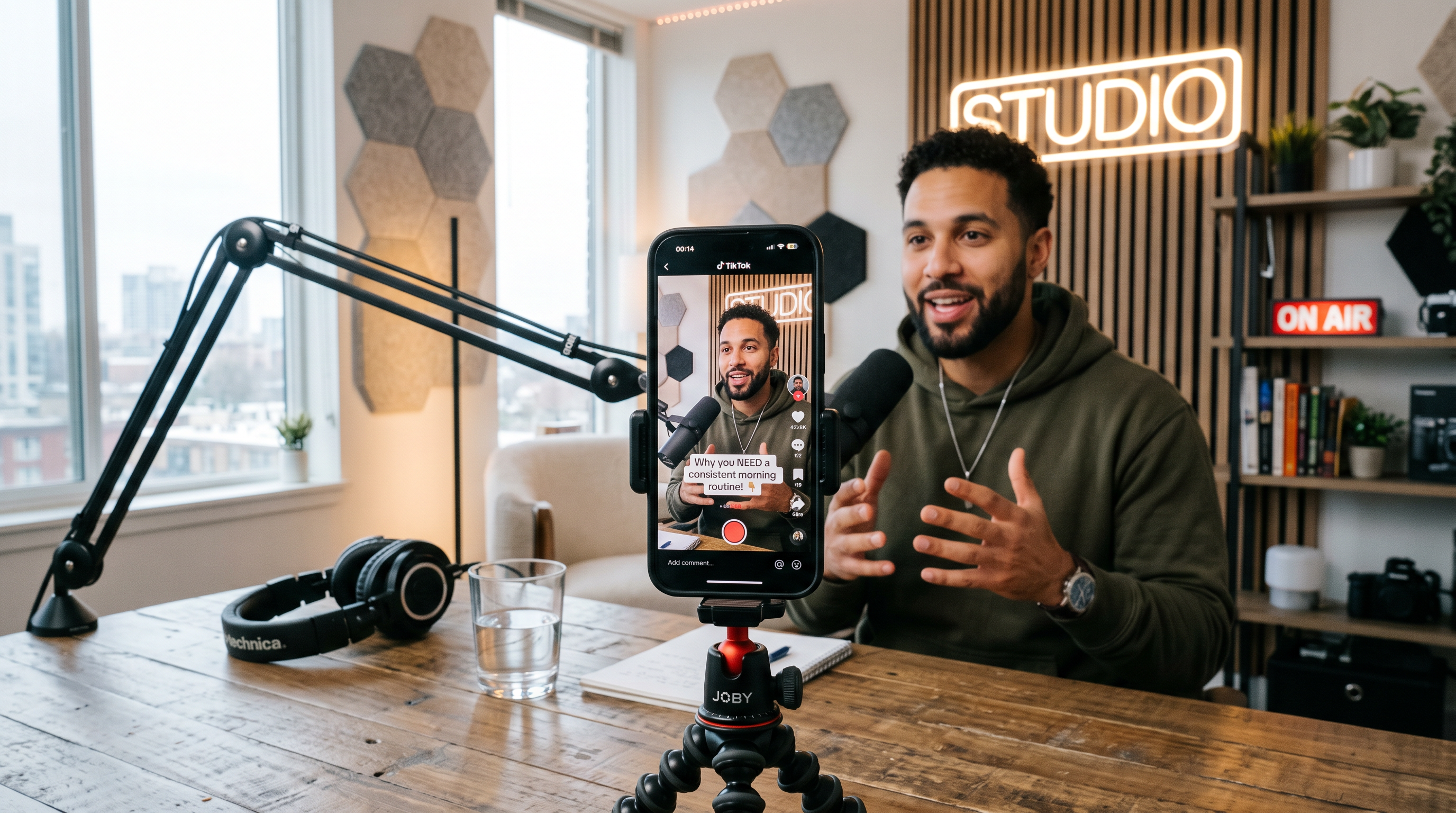
- Talk to the camera, with captions on
- Add a title graphic
- Use the full character count
Why TikTok SEO is worth a hotel marketer’s time
Do people actually search on TikTok?
Yes: 49% of U.S. consumers said they had used TikTok as a search engine in Adobe’s January 2026 survey, and TikTok reports that 86% of Gen Z internet users search on the platform weekly. The nuance matters, though. That same Adobe data, reported by Search Engine Journal, found that the share of Gen Z who prefer TikTok to Google fell from 8% in 2024 to 4% in 2026. People are not abandoning Google for TikTok. They are searching both, for different jobs. Google is where they confirm; TikTok is where they browse, compare, and get a feel for a place.
Google has said as much itself. Back in 2022, Google’s search chief Prabhakar Raghavan told a Fortune conference that in Google’s studies, “almost 40% of young people, when they’re looking for a place for lunch, they don’t go to Google Maps or Search,” they go to TikTok or Instagram (TechCrunch, July 2022). Note the specific example: a place for lunch. Local discovery. That is a hotel’s home turf.
What does TikTok search mean for hotels and destinations specifically?
TikTok’s own travel research says 83% of its users agree the app sparks interest in destinations they had not considered, and users are 80% more likely to book something they were inspired by on the platform (TikTok for Business, Travel Industry on TikTok). Those are TikTok’s numbers about TikTok, so read them with the appropriate squint. Still, the direction lines up with what we see in client analytics: travel is a category where people research by watching. A 40-second walkthrough of a room answers questions a booking engine cannot.
Then there is the second search engine. Google’s Search Central documentation states plainly that “when you create content on platforms like TikTok, Instagram, X, and YouTube, your audience can also find your content when they search with Google,” and Search Console now lets you track how that social content performs (Google Search Central). Search Engine Land has documented TikTok captions being pulled into a Google featured snippet (January 2024). One well-built video can rank in two places at once. That is the ROI case we made in our video-first content strategy post, and TikTok SEO is how you collect on it.
Strategy 1: Search for queries before you shoot
How do you find what people search for on TikTok?
Start in the TikTok search bar itself: type the beginning of a phrase your guests would use and let autocomplete finish it, because those suggestions are drawn from real searches. Then open Creator Search Insights, the tool TikTok launched in March 2024 that shows which topics people are searching for and, more usefully, flags “content gap” topics: things searched often but covered by few videos. For a hotel, a content gap looks like “hotels near [convention center] with free parking” or “is [your town] worth visiting in February.” Nobody has made that video. You can, this afternoon.
Round it out with the tools you already use for web SEO. Google’s People Also Ask boxes, Ahrefs, or Semrush will show you the question-shaped queries in your market, and those phrases work on both platforms. A tip we borrowed from our voice search work: the best TikTok queries read the way people talk, not the way they type into a booking engine. “Where should I stay in Asheville for a girls’ trip” beats “Asheville boutique hotel.”
Should you make one video per query?
Yes. One video, one query, stated plainly, is the structure that ranks. The creator at the top of Google for our test search had a description that was the query itself, followed by five hashtags. Not a story, not a vibe. An answer with a label on it. That focus also solves the “what do we post” problem: every content-gap phrase in Creator Search Insights is a brief. Build a list of thirty, shoot them in two afternoons, and you have a quarter’s calendar that is search-driven instead of trend-chasing. (You can still chase trends. Just not with the search budget.)
Strategy 2: State your purpose in the first three seconds
Why does the opening line matter for TikTok SEO?
Because TikTok’s own creative guidance says to introduce your content proposition in the first three seconds, and because that opening sentence is where your target query should live, spoken aloud. The first three seconds do double duty. For the human, it is the hook that decides whether they keep watching, and retention is the signal TikTok weighs most heavily; Ahrefs’ guide quotes creator strategist Charlotte Ang calling retention rate “the most important metric” (Ahrefs, updated August 2026). For the machine, it is the first thing transcribed. If the video is about the best time to visit your resort, the first words out of your mouth should be “the best time to visit [resort] is…” and then the answer.
This is the same rule we apply to web copy for AI search: answer first, explain second. Our hotel SEO strategy for AI search post walks through why front-loaded answers get quoted by AI Overviews, and a TikTok transcript is no different. The models reading it reward the clip that gets to the point.
What does a purpose-first opening sound like?
It sounds like a person answering a question a friend just asked, with the question repeated in the answer. Compare these two openings for the same walkthrough video:
- Vibe-first: “Okay you guys are not ready for this room.” (Fun. Zero searchable words.)
- Purpose-first: “If you’re looking for a hotel in Savannah with a rooftop pool, this is the one, and here’s the room you’d book.” (Same energy, and the query is in the transcript before the second frame.)
You do not have to be stiff. You have to be specific. Phrasing, as we like to say, is everything.
Strategy 3: Talk to the camera, with captions on
Does TikTok use what you say in the video for search?
TikTok’s published list of ranking signals includes “video information, which might include details like captions, sounds, and hashtags” (TikTok Newsroom), and since TikTok turned auto-captions on by default for eligible videos in late 2023, everything you say on camera becomes a text layer attached to the post. Speaking your keywords is the most reliable way to get them into the video’s metadata without doing anything that looks like SEO. It also produces the caption file that makes the clip watchable with the sound off, which is how a meaningful share of people watch anything.
TikTok has not published a paper saying “we rank on transcripts,” so we will be honest about the inference: the signals list names captions, the auto-caption system generates them from your speech, and every practitioner guide from Metricool to Ahrefs reports that spoken keywords help. That is strong circumstantial evidence, and the cost of acting on it is zero. Say the words.
How should hotel teams film talk-to-camera content?
Put a real person in front of the lens and have them answer one question in plain language, then fix the auto-captions before posting. Three practical rules:
- Edit the transcript: Auto-captions mangle proper nouns, and your hotel’s name is a proper noun. TikTok lets you edit generated captions; take the 60 seconds to correct the brand, the neighborhood, and any local place names, because those are the terms you are trying to rank for.
- Pick a face, not a logo: A concierge, a chef, or the GM talking about their favorite table works better than a voiceover on b-roll. TikTok’s own Search Ads team describes every query on the platform as both “What’s the answer?” and “Whose take can I trust?” (TikTok for Business, September 2025). A person supplies the second half.
- Repeat the query once, naturally: Open with it, then land on it again in the closing line (“so that’s why I’d pick this room if you want a Savannah hotel with a rooftop pool”). Twice is plenty. Ten times is keyword stuffing, and both Ahrefs and Search Engine Land warn that stuffing hurts on TikTok the way it does everywhere else.
Strategy 4: Add a title graphic
Why put a text title on the first frame of a TikTok?
Because the first frame is your thumbnail in TikTok search results, in your profile grid, and in Google’s short-video carousel, and a title graphic turns that thumbnail into a headline. Scroll any TikTok search results page and notice which clips get the tap: the ones with a readable line of text telling you what the video answers. “Best rooftop pool hotel in Savannah” over a pool shot beats the pool shot alone, because a searcher is scanning for a match to what they typed. The title graphic is the match.
It also adds a second text layer. TikTok’s Keyword Insights tool in the Creative Center reports on keywords that appear in voiceovers, text overlays, and captions of top-performing ads, which tells you TikTok reads overlay text, at least on the ads side. Search Engine Land’s guide recommends keywords in on-screen text for the same reason. We treat it as a should, not a maybe.
What makes a good TikTok title card?
A good title card is the query in five to eight words, large enough to read at thumbnail size, placed in the upper-middle of the frame so the caption and buttons do not cover it. TikTok’s own creative guidance suggests keeping on-screen text to about five to ten words per second of read time; a title card needs to be read in one glance. A few more rules from our production checklist:
- Use TikTok’s native text tool when you can: Text added in the app is data TikTok can read directly; text baked into the video in an editor is only readable if it is OCR’d, which we cannot confirm TikTok does. Native text is the safer bet, and it lets you set the timing.
- Keep the title on screen for the first two to three seconds, then get out of the way: The card labels the video; it does not need to narrate it.
- Match the spoken opening: If the card says “Best time to visit Sedona,” the first sentence should say the same. Consistency across layers is the point.
- Brand it lightly: A small logo or a consistent color bar makes your search results recognizable as a set. It also helps the cover thumbnail look intentional on your profile grid.
Strategy 5: Use the full character count
How long can a TikTok description be in 2026?
Up to 4,000 characters, roughly 600 to 700 words, which is a blog post, not a caption. TikTok raised the limit from 300 to 2,200 characters in September 2022 (reported by Hootsuite at the time) and then to 4,000 in 2023; TikTok did not put out a press release for the second jump, so the 4,000 figure rests on creator reports and every character-counter tool we checked, but it is the working limit as of this writing. Most brands still use about 40 of those characters. That is the opportunity.
The description matters more than most teams realize for one specific reason: on tiktok.com, the video’s description is the page title and meta description that Google indexes. Look at any TikTok that ranks on Google and the blue link is the caption text. Which is why the creator ranking first for our test query had written the query as the caption. It was, functionally, a title tag. Treat it like one.
What should go in a 4,000-character TikTok description?
The answer, then the context, then the housekeeping, in that order, written like a short article rather than a hashtag pile. Here is the structure we use:
- Line one is the query, answered: “Hotels in Savannah with a rooftop pool: here’s the room and the view at [Hotel].” This is what shows before “…more,” what becomes the Google title, and what TikTok search matches first.
- Two to four short paragraphs of useful detail: What the video shows, the practical answers a searcher wants (rates start at, walk time to the historic district, which rooms face the river, pool hours). Write it the way you would answer a guest’s email. Natural language, related phrases, no stuffing.
- A call to action with a next step: “Link in bio for rates” or “Comment ‘pool’ and we’ll send the room type.” Metricool’s 2026 study found posts that ask a question earn 26.19% more comments (Metricool, 2026 TikTok Study), and comments are the engagement TikTok’s signals reward.
- Three to five hashtags, last: One for the category (#savannahhotels), one or two for the query (#rooftoppool), one broad (#traveltiktok). Metricool reports hashtag-driven traffic on TikTok more than doubled in a year (up 114%), so they still matter; they just do not need to be the whole caption.
If you already write the room descriptions on your website with search in mind, you know how to do this. In fact, the same copy can move in both directions; that is the whole thesis of our post on the right way to repurpose content.
The honest caveat: search is a small slice of TikTok, on purpose
How much TikTok traffic actually comes from search?
About 4% of impressions, according to Metricool’s 2026 study of 2.3 million posts, while the For You page delivers roughly 73% of views (Metricool press release, May 2026). Anyone who tells you TikTok SEO will replace the algorithm is selling something. Search is a small door. It is also the only door where the person walking through already told you what they want. A view from “hotels in Savannah with a rooftop pool” is worth a stack of views from someone scrolling past your pool at 11pm, because one of them is planning a trip.
The two are not in competition anyway. The strategies above make a video clearer, faster, and more useful to a human, which is exactly what drives the watch-time and engagement signals that the For You page rewards. Metricool’s same study found that with nearly 80% more content on the platform year over year, average views fell about 31%. When the feed gets that crowded, a video that answers a specific question has an edge in both places. And unlike the For You page, a search ranking keeps working: the same study found a post collects 96% of its total reach in the first ten days, but a video that ranks for a query keeps getting found long after the feed has forgotten it.
The TikTok SEO checklist
What should you check before you hit post?
Run every search-driven video through this checklist; it takes two minutes and catches the misses that cost a ranking.
Final thoughts
TikTok SEO is not a trick and it is not a separate discipline. It is the same thing good search work has always been: figure out what people ask, answer it clearly, and label the answer so machines can find it. The difference on TikTok is that the label lives in three places at once, in what you say, what you show, and what you write underneath, and most of your competitors are filling in one of the three at best. A hotel that fills in all three, for thirty specific questions its guests actually ask, will own those searches for a long time, on TikTok and on Google, without a single trending sound.
Want your property showing up when travelers search, not just when they scroll? Contact Phrasing to build a search-first short-form video plan for your hotel or destination.
Key Takeaways
What is TikTok SEO?
TikTok SEO is optimizing a video so it ranks for a specific search phrase inside TikTok and on Google. It works by placing that phrase in the three text layers search systems can read: the spoken audio (via auto-captions), on-screen text, and the description.
How do I find keywords for TikTok?
Type a partial phrase into TikTok’s search bar and use the autocomplete suggestions, then check Creator Search Insights for “content gap” topics that are searched often but rarely covered. Cross-check with Google’s People Also Ask or an SEO tool so the phrase works on both platforms.
Does saying keywords out loud help TikTok SEO?
TikTok names captions as a ranking signal and turns on auto-captions by default, so words you speak become text attached to the video. State the query in the first three seconds and once more near the end, then edit the auto-captions to fix names and places.
How long can a TikTok caption be?
Up to 4,000 characters as of 2026, after increases from 300 to 2,200 in 2022 and to 4,000 in 2023. Lead with the query as the first line, since that line becomes the page title Google indexes, then add short paragraphs of practical detail, a comment prompt, and three to five hashtags.
Is TikTok SEO worth it if search is only 4% of views?
Yes, because search views come from people who typed what they want, which for a hotel means a traveler planning a trip. The same clarity that wins search (a purpose-first opening, a title card, a useful description) also improves retention, the signal the For You page rewards most.